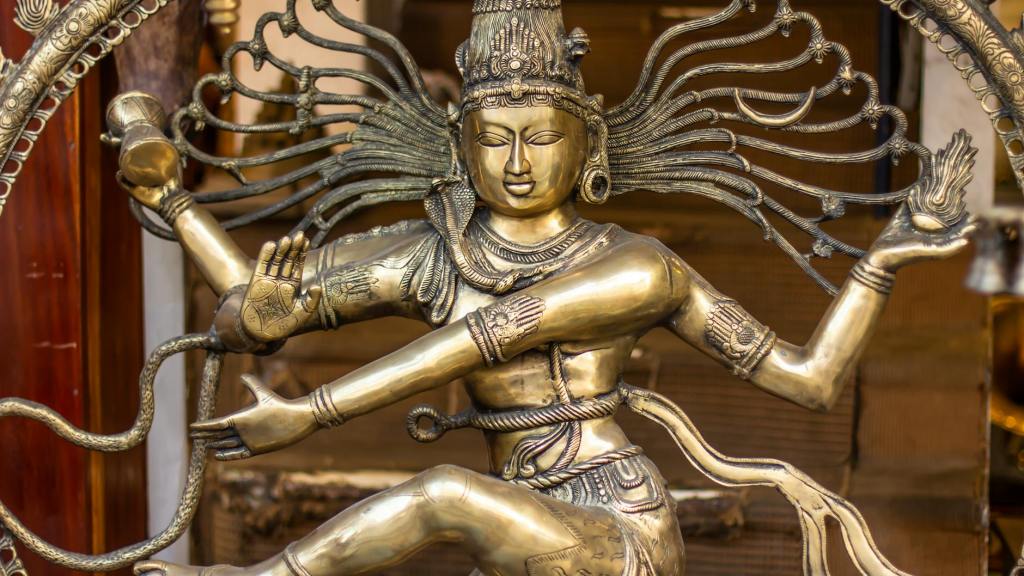
This is my personal interpretation of Tandava. With a humble bow to Mahadev — my Guru — I share these reflections.
Mahadev, known to us as Shiva, is Adi Yogi — the one who taught the world meditation, stillness, and inner mastery. Yet when he lost Maa Sati, he did not turn inward into silence. He did not sit in meditation or withdraw from the world. Instead, he moved. He danced. This single detail is not incidental; it is the deepest hint hidden inside the idea of Tandava.
Deep grief is not quiet. It is restless, overwhelming, and excessive. Meditation works when the mind can become still, but intense loss does not allow that immediately. It asks for release first. Mahadev understood that the body had to participate before the mind could settle. Tandava was not a performance, not a message, and not an act of rage. It was the most honest expression available when stillness was impossible.
What the world witnessed as destruction was, for Lord Shiva, survival. The energy of grief was so immense that when it moved through his body, it shook everything around him. To observers, this movement appeared violent, and so it came to be called the dance of destruction. But from within, it was a way to prevent collapse. Pain that has no outlet turns inward and destroys silently. Pain that is allowed to move may look intense, but it heals.
This is why Mahadev is also known as Nataraja. The dance is not separate from wisdom; it is part of it. The stamping feet, the relentless rhythm, the fierce motion — all allowed grief to pass through the body instead of lodging permanently in the mind. The dance continued until expression began to exhaust the pain and space slowly returned for awareness.
At this point, Vishnu intervened — not to suppress Tandava, and not to control Shiva, but to help release what remained unresolved. By disintegrating Maa Sati’s body, the unbearable weight of grief was no longer concentrated in one form. The pain was broken into parts, made lighter, and easier to let go. This intervention helped Lord Shiva return to balance sooner than he might have on his own. The message is subtle but clear: some grief cannot be processed alone. Sometimes healing requires others to help us dismantle pain piece by piece.
Only after the grief had moved through the body did stillness become possible again. Meditation came later — not as an escape, but as a natural return once the storm had passed. The order matters. Stillness before expression becomes suppression. Expression before stillness becomes integration.
The deeper teaching of Tandava is not mythological; it is deeply human. When emotional wounds are fresh, do not rush yourself into calm. Do not force routine or demand silence. Walk. Dance. Shake. Cry. Let the body carry what the mind cannot yet hold. And if it feels too heavy, allow friends, family, or time to help disintegrate the pain.
Tandava reminds us that healing is not always gentle at the beginning. Sometimes it is loud, messy, and misunderstood. But movement prevents stagnation, and expression prevents decay. When the energy has passed through you, peace arrives naturally — just as it did for Mahadev.
Move first. Peace will follow.
“Har Har Mahadev“
 Quiet Reflections