Category: Reflections

  • Two Keys

    Two Keys

    A bank locker has always made sense to me as a way of thinking about how things actually work in life — not because it’s a perfect analogy, but because it captures something that most frameworks quietly skip over.

    You have one key. The bank has the other. And no matter how prepared you are, no matter how many times you’ve rehearsed the combination in your head, nothing opens unless both keys turn at the same time.

    There are two ways this goes wrong, and both are quietly maddening in their own way. The first is when you show up fully ready — key in hand, everything in order — and find the bank closed, the manager out, or the system down. You’ve done everything right. It just doesn’t matter today. The second is when the bank calls you in, everything on their side is ready to go, and you get there and realise you left your key at home. Same result. Nothing moves. And in both cases, the thing that failed you wasn’t effort — it was alignment. The two sides simply weren’t in the same place at the same time.

    If you let the metaphor stretch a little, one of those keys is everything you carry — the work you’ve put in, the thinking you’ve sharpened, the preparation that nobody sees. The other key belongs to everything outside you — timing, context, the right person reading the right thing on the right day, a market that’s finally ready, a conversation that happens to go somewhere. You can’t hold that key. You can’t really earn it. You can only keep yours in good shape and hope that at some point, both show up together.

    That part is easy enough to accept. What’s harder is the question that comes after it.

    Because if you’ve been doing the work, genuinely doing it, and the door still hasn’t opened — what are you supposed to make of that? Do you stay on the same path, keep building, trust that the timing will eventually catch up to you? Or do you take the fact that nothing has opened as information — as a sign that maybe this particular door isn’t yours, and it’s time to try somewhere else? There’s no clean answer, and anyone who offers you one quickly is probably not being fully honest with you. If you stay, you might just be early. Or you might be loyal to something that was never going to work. If you move, you might be making a smart adjustment. Or you might be leaving the moment before things would have finally shifted. You won’t know. That’s not a solvable problem — it’s just the actual texture of being in the middle of something.

    People will have opinions, of course. Some will tell you patience is everything. Others will tell you that if it were meant to happen, it already would have. Both can sound convincing, depending on the day and your mood and who’s saying it. But neither of them actually turns the lock.

    The thing that has made this easier to sit with — not easier to solve, just easier to carry — is a small shift in how you think about what your key actually is. For a long time, it’s tempting to think of the idea as your key. The specific thing you’re building, the particular version of the thing you’re trying to make work. But ideas are fragile vessels for timing. The same idea can be exactly wrong in one moment and exactly right in another, and the difference between those two moments might have nothing to do with you. What doesn’t shift like that — what doesn’t go stale or arrive too early or get overtaken by someone else — is the way you think, the depth you’ve built, the quality of attention you bring to problems. That travels with you. That’s the key that fits more than one lock.

    So if one door doesn’t open, you’re not back at the beginning. You’re just standing in front of a different door, with the same key in your hand.

    The Bhagavad Gita has said all of this with more precision than I’ve managed here:

    कर्मण्येवाधिकारस्ते मा फलेषु कदाचन ।
    मा कर्मफलहेतुर्भूर्मा ते सङ्गोऽस्त्वकर्मणि ॥ ४७ ॥

  • How Much of a Roark Can You Afford to Be?

    How Much of a Roark Can You Afford to Be?

    Howard Roark didn’t explain his work. He built, and let it stand.
    That idea sounds clean — until you’re inside an organization.

    You do the work. You solve real problems. You make decisions that hold. And still, things don’t always move. Not because the work is wrong. Because it didn’t travel.

    So you watch. Some people say just enough — frame things a little better, get picked up faster. Not always deeper. Just easier to absorb. And the question shifts. Not is this right? but what works here?

    You can see how you’d do the same. The adjustment isn’t hard. And then you’re in a familiar place — A smart place. You’ve traded some Roark for Keating.

    And once you’ve made that trade — the Keating skills grow. You get better at the room, better at the framing, better at being picked up. More fluent. More visible. Call it the presentable Roark. Enough conviction to seem real. Enough polish to travel.

    And that’s when it gets genuinely dangerous. Because the trajectory looks right. The growth is measurable. The movement is real. The question isn’t whether. It’s how far. And what exactly is being surrendered in the process. Not skill. Not effort. Something subtler. Call it integrity, call it alignment — call it whatever makes it easier to sit with.

    That’s when the real question arrives. Not about success or growth. About limits. If some compromise works — how much is acceptable? If a small adjustment helps — how far does it go? There’s no clean line. Only movement. Slow enough to justify. Fast enough not to notice.

    And somewhere along the line — आधा तीतर, आधा बटेर ।

  • When Pride Falls

    When Pride Falls

    The Story We Keep Telling

    Across cultures and centuries, a certain kind of story keeps appearing. A slow tortoise racing a swift hare. A young shepherd standing before a towering warrior. A lone figure confronting someone everyone believes cannot be defeated. The characters change, the setting changes, yet the pattern remains familiar. Someone powerful, confident in past victories, faces an opponent who appears vastly weaker. The outcome seems obvious long before the contest begins. Yet somewhere along the way, the mighty fall.

    We usually remember these stories as lessons about arrogance. Pride blinded the strong, we say. But that explanation tells only half the story. The other half belongs to the person standing on the weaker side of the contest. What does it feel like to face someone whose strength seems unquestionable while the world quietly assumes the outcome is already decided?

    Standing Against the Odds

    Imagine being that person. Across from someone stronger, faster, richer, or more powerful in every visible way. The verdict around you is almost unanimous. Friends hesitate. Observers whisper. Some show concern, others quiet amusement. Even well-meaning advice carries the same message: this is a battle you cannot win.

    The underdog is rarely unaware of this reality. He sees the same odds everyone else sees. He understands the gap. If the contest were repeated many times, he might lose most of them. Yet circumstances sometimes leave little room for retreat. Duty, chance, necessity, or simply refusing to step aside can lead someone into a fight they never expected to face.

    The Quiet Shift

    Something interesting happens before the contest truly begins. At some point the underdog stops calculating the outcome and confronts the possibility of defeat directly. He imagines the loss, the disappointment, the moment when observers nod and confirm what they believed all along. Strangely, once that future is accepted, something begins to change.

    Fear loosens its grip. When there is nothing left to protect, the mind becomes lighter. The stronger opponent carries the burden of reputation and expectation. His victories must continue. The underdog carries no such weight. Because defeat is already assumed, he is free in a way his opponent may not be. That freedom sharpens attention. Movements become clearer, decisions simpler, hesitation fades.

    Many contests are lost not just because of strength, but because of doubt. But once someone has accepted the possibility of losing, doubt has less space to grow. The fight becomes simpler: respond, adapt, continue.

    Strength and Habit

    At first the contest usually unfolds exactly as expected. The stronger side dominates, confirming the assumptions everyone carried into the moment. Yet the underdog stays, not because he knows he will win, but because leaving guarantees defeat.

    What unfolds next is often subtle. Success has its own quiet side effects. Repeated victories create confidence, and confidence slowly becomes habit. When someone has won many similar battles before, it becomes easy to assume the next one will follow the same pattern. Opponents begin to resemble earlier opponents. Situations begin to feel familiar.

    The powerful do not necessarily become weaker. They simply begin to repeat what has always worked. And over time, they stop looking as carefully as before.

    The Moment That Changes the Story

    When failure disappears from the imagination, small details receive less attention. A slight misjudgment or careless move may pass unnoticed because in earlier contests such moments never mattered.

    But if the opponent refuses to leave the field, those small openings can suddenly matter.

    The underdog does not become stronger in a single instant. What matters is that he is still present when opportunity appears. He has endured the early pressure, absorbed the doubts, and stayed long enough to notice something others assumed would never arrive.

    And sometimes that is enough for the story to change.

    When Courage Spreads

    Even when victory does not come immediately, something else begins to grow. Each battle removes a little more fear and adds experience. Someone who once felt uncertain becomes battle-tested. Loss stops feeling like an ending and begins to resemble preparation.

    People notice that spirit. Not the loud confidence that comes from power, but the quieter resolve of someone who keeps returning despite long odds. What begins as a single act of resistance slowly becomes visible to others.

    Courage travels quietly. One person stands. Another begins to think the same way. What once looked like an isolated challenge begins to shift the atmosphere of the contest.

    When Pride Falls

    Stories of the mighty falling appear again and again not because the weak always win, but because strength and certainty rarely remain balanced forever. Success often brings confidence, but repeated success can slowly narrow perception. When certainty becomes too comfortable, it leaves space for the unexpected challenger.

    The fall of pride rarely begins with weakness. More often it begins when judgement grows clouded by certainty. And the rise of the underdog rarely begins with sudden strength. It begins when fear slowly leaves the mind.

    Perhaps this quiet balance has long been captured in a few simple lines from Goswami Tulsidas Ji in the Ramcharitmanas:

    “जाको विधि दारुन दुख देही, ताकी मति पहिले हर लेहीं।
    जाको विधि पूरन सुख देहीं, ताकी मति निर्मल कर देहीं।”

  • When the Mind Catches Fire

    When the Mind Catches Fire

    There is a phase in life when you go to sleep with a problem — and wake up still inside it. You solve it in dreams, rearrange it in silence, test it before the day even begins. From the outside, it may look like struggle. To you, it feels alive.

    But not all fire is the same. Intensity can come from fear, from anger, or from immersion. The hours may look identical. The inner state is not.

    When fear fuels you, the mind contracts. You think in worst-case scenarios, trying to avoid loss. Even success feels like relief, not fulfillment. When anger fuels you, energy runs high but unstable. You push hard and move fast, but the center remains unsettled, and the outcome carries exhaustion with it.

    Immersion feels different. The mind expands instead of tightening. Conscious and subconscious begin working together. There is pressure, but no inner friction. You are not running from consequences; you are moving toward clarity.

    In that state, learning accelerates. Decisions require less noise. You begin to see structure where others see chaos. Logic and intuition align without argument. Life may look imbalanced for a while — meals irregular, sleep shorter, weight fluctuating. To others, it appears unsustainable. But internally, something powerful is forming.

    Weeks, months, even years later, you understand what that phase built inside you. You respond instead of react. You stay steady under complexity. You handle situations instead of being handled by them.

    The problem that once consumed you fades.

    The fire outside is handled. The flame inside keeps burning.

  • Anger, Fear, Mind, & Systems Thinking

    Anger, Fear, Mind, & Systems Thinking

    Decoding Anger

    I started thinking about anger long before I had words for it, mostly because it shows up without invitation, without asking for permission, and without caring whether the situation is simple or complex, fair or unfair, safe or dangerous. Anger arrives fast, almost instantaneously, and when it does, something very specific happens: the mind narrows, thinking slows or disappears, and the body prepares to act.

    Anger, in its original form, was never meant to be moral or immoral. It was meant to be useful. Over millennia, it evolved as a shoot-or-scoot response — an immediate surge of energy designed to protect the self when time was scarce and hesitation was costly. In such moments, thinking was a liability. Analysis took too long. Intuition and reflex mattered more. Anger solved that by suppressing deliberation and pushing the organism into motion.

    In that sense, anger is not a failure of intelligence. It is a biological shortcut — a way to convert threat into action without waiting for certainty.

    Decoding Fear

    Fear, often confused with anger, is something entirely different. Where anger pushes energy outward, fear pulls it inward. Instead of mobilization, there is contraction. Instead of movement, there is stillness. Fear communicates a different message to the system: do not act yet. In many situations, its function is not escape or confrontation, but waiting — letting the danger pass, letting the disturbance move on, and only then shifting quietly toward safety.

    In fear, effort feels costly and visibility feels risky. The body conserves energy, reduces exposure, and minimizes motion. Stillness, here, is not indecision; it is strategy.

    Yet fear, like anger, also suppresses the thinking mind — not because speed is required, but because analysis offers little advantage when the safest option is to remain unnoticed or unmoving. Logic narrows because options narrow.

    Anger and fear move in opposite directions, but they serve a similar purpose. Both exist to protect the self quickly. Both silence deliberation. Both trade long-term reasoning for short-term survival.

    When Anger and Fear Are Misused

    Anger and fear were shaped to be brief. They were never meant to stay. Their usefulness depended on appearing quickly, doing their work, and receding. What feels different today is not that anger and fear exist, but that they linger.

    Anger stretches beyond immediate threat and survives across conversations, hierarchies, and timelines. Fear becomes anticipatory rather than situational. In both cases, the mind remains suppressed longer than it was designed to. What was once a temporary narrowing starts to feel normal.

    This misuse is difficult to notice because things still function. Decisions are made. Actions are completed. From the outside, it can even look effective. But the work is being done with the mind only partially available.

    Over time, reflection feels slow. Pausing feels risky. The absence of thinking is mistaken for efficiency. At that point, anger and fear stop being responses. They begin to shape patterns.

    Symptoms of a Reactive System

    Anger and fear rarely move at random. Anger tends to flow outward — from positions of perceived strength toward vulnerability. It asserts and overrides. Fear moves inward. It drains energy, narrows options, and makes resistance feel costly. One pushes. The other collapses. Together, they shape behavior without needing explanation.

    When these emotions persist beyond the moments they were designed for, they begin to organize the system itself.

    One early symptom is urgency without clarity. Everything feels immediate. Speed becomes a stand-in for seriousness. Pausing feels risky, not because the situation demands it, but because the system no longer trusts stillness.

    Another is completion without understanding. Actions are taken, issues are closed, and attention moves on. The relief of finishing replaces reflection. Over time, the system becomes good at responding and poor at learning.

    Gradually, this way of operating starts to feel normal. Anger lingers. Fear becomes ambient. Thinking narrows. Familiar responses repeat. What once felt decisive hardens into reflex.

    At that point, the system is no longer reacting to events.
    It is reacting to itself.

    Which leaves a question worth holding:

    If anger and fear were meant to be brief responses, what happens when systems are shaped by their prolonged use?

    Taking the Control Back

    If anger and fear can suppress the mind, the question is not how to eliminate them, but how control returns once they appear.

    Meditation and breathing are often described as practices for calmness or relaxation, but their more practical role is different. They are mechanisms for regaining control — specifically, control over how and when energy is spent.

    The mind can generate immense energy, but breath determines its cost. Breath is slow, measurable, and always available. Through breath, the system learns restraint. Through awareness, the mind regains access to itself.

    In this sense, the mind is the source, breath is the regulator, and energy is the currency. Anger and fear are not enemies here; they are arrows. The bow remains constant, but arrows are chosen depending on the situation. The mistake is not in having arrows, but in firing them blindly or repeatedly without awareness.

    Improving the Mind: A Modern Technique (Systems Thinking)

    Once some control over internal states is established, a different question emerges — not about emotion, but about thinking.

    Much of human response is naturally linear, anthropocentric, mechanical, and ordered. We prefer simple causes, clear agents, direct fixes, and immediate results. Not because we are careless, but because complexity is expensive. Cognitive load drains energy, and the mind seeks efficiency.

    But the world increasingly resists this simplicity. Volatility, uncertainty, complexity, and ambiguity are no longer edge cases; they are the environment. In such conditions, linear responses backfire. Local fixes create distant problems. Quick reactions amplify instability.

    Systems thinking does not remove uncertainty. It increases tolerance for it. It trains the mind to hold context, to anticipate second-order effects, and to delay reaction without freezing. In doing so, it quietly upgrades both intelligence and emotional regulation. It reduces the likelihood that fear or anger will hijack decisions in environments where such hijacking is costly.

    Expected Outcome

    At this point, it is tempting to ask about being right. But that turns out to be the wrong question. Outcomes — success and failure, gain and loss — are not fully in our control. Responses are. Training the mind, regulating energy, and expanding context do not guarantee success. They reduce catastrophic errors. They improve entry conditions. They shorten recovery.

    Over time, this matters.

    Much like in investing, where buying right often matters more than selling high, life seems to reward better entries more reliably than perfect exits. Probability does not disappear, but it begins to work differently.

    Closing Reflection

    Anger and fear tend to appear when situations feel dire, when something important is at stake and the window for response feels narrow. In those moments, they arrive as reflex, not choice. That is likely how they were meant to function.

    What has slowly become clearer to me is that the difference is rarely in the situation itself. It lies in how much of it I am able to see, and how much of myself I am able to keep when pressure rises. That is not something I have achieved, and it is certainly not something that changes quickly.

    The word impossible often appears when that control is lost early — when the mind narrows, energy spills, and response collapses into habit. Occasionally, with awareness and training, the same situation looks slightly different. Not easy. Not solvable. Just less final.

    This is not about mastering outcomes or overcoming fate. Much of that remains outside reach. It is about noticing that when responses are a little less reactive, fewer moments are handed over entirely to luck.

    This way of thinking did not arrive as a conclusion. It emerged slowly, by watching patterns repeat — in moments of anger, in moments of fear, and in the quieter spaces where neither was fully in control.

    And perhaps that is enough: to notice, to adjust, and to keep returning attention to what can be trained, while accepting what cannot.

  • Decoding Tandava: Moving Through Grief

    Decoding Tandava: Moving Through Grief

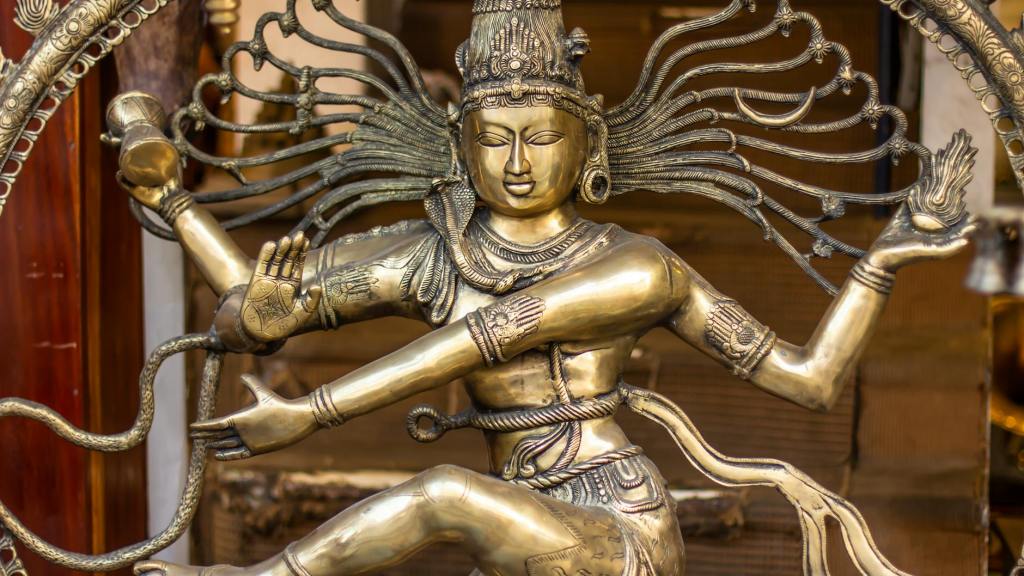
    This is my personal interpretation of Tandava. With a humble bow to Mahadev — my Guru — I share these reflections.

    Mahadev, known to us as Shiva, is Adi Yogi — the one who taught the world meditation, stillness, and inner mastery. Yet when he lost Maa Sati, he did not turn inward into silence. He did not sit in meditation or withdraw from the world. Instead, he moved. He danced. This single detail is not incidental; it is the deepest hint hidden inside the idea of Tandava.

    Deep grief is not quiet. It is restless, overwhelming, and excessive. Meditation works when the mind can become still, but intense loss does not allow that immediately. It asks for release first. Mahadev understood that the body had to participate before the mind could settle. Tandava was not a performance, not a message, and not an act of rage. It was the most honest expression available when stillness was impossible.

    What the world witnessed as destruction was, for Lord Shiva, survival. The energy of grief was so immense that when it moved through his body, it shook everything around him. To observers, this movement appeared violent, and so it came to be called the dance of destruction. But from within, it was a way to prevent collapse. Pain that has no outlet turns inward and destroys silently. Pain that is allowed to move may look intense, but it heals.

    This is why Mahadev is also known as Nataraja. The dance is not separate from wisdom; it is part of it. The stamping feet, the relentless rhythm, the fierce motion — all allowed grief to pass through the body instead of lodging permanently in the mind. The dance continued until expression began to exhaust the pain and space slowly returned for awareness.

    At this point, Vishnu intervened — not to suppress Tandava, and not to control Shiva, but to help release what remained unresolved. By disintegrating Maa Sati’s body, the unbearable weight of grief was no longer concentrated in one form. The pain was broken into parts, made lighter, and easier to let go. This intervention helped Lord Shiva return to balance sooner than he might have on his own. The message is subtle but clear: some grief cannot be processed alone. Sometimes healing requires others to help us dismantle pain piece by piece.

    Only after the grief had moved through the body did stillness become possible again. Meditation came later — not as an escape, but as a natural return once the storm had passed. The order matters. Stillness before expression becomes suppression. Expression before stillness becomes integration.

    The deeper teaching of Tandava is not mythological; it is deeply human. When emotional wounds are fresh, do not rush yourself into calm. Do not force routine or demand silence. Walk. Dance. Shake. Cry. Let the body carry what the mind cannot yet hold. And if it feels too heavy, allow friends, family, or time to help disintegrate the pain.

    Tandava reminds us that healing is not always gentle at the beginning. Sometimes it is loud, messy, and misunderstood. But movement prevents stagnation, and expression prevents decay. When the energy has passed through you, peace arrives naturally — just as it did for Mahadev.

    Move first. Peace will follow.

    Har Har Mahadev

  • The Spirit of Diwali: Lighting the Lamp Within

    The Spirit of Diwali: Lighting the Lamp Within

    Diwali has always been a time of joy, togetherness, and rekindling old memories. This year, the festival brought a special sense of closeness as my siblings and I sat with our mother, reliving our childhood stories. As we laughed about old memories — like our mischievous cow ‘Soma’ causing chaos every time a guest arrived or the carefree nights spent counting stars from the rooftop — it felt as if we were transported back to those simpler times.

    Today, as an eldest son, a husband, father, brother, and colleague, Diwali still serves as a bridge to those cherished memories of carefree days. Even though our lives have evolved and our childhood home has been transformed, the warmth of those memories and the laughter we share keep the spirit of Diwali alive. It’s this bond and the enduring love that make the festival so meaningful, year after year.

    Diwali and the Journey of Personal Growth

    As a child, Diwali was all about firecrackers, sweets, and fun. Sitting through the pooja felt like a formality before running off to light fireworks. Now, watching my own children squirm with the same restlessness, I’m reminded of my own impatience back then. The characters in our Diwali celebration have changed — my father and grandmother are no longer here, my sisters are married, and our children now take center stage — but the spirit remains, as does the tradition of coming together.

    This passage of time has shown me how each diya we light connects the past to the future, symbolizing a bridge between generations. Each flame not only honors cherished memories but also passes on values and traditions to the next generation. Diwali is no longer just an external celebration; it’s a moment to come together, build new memories, and rekindle the old ones, filling us with a sense of continuity and renewed energy. It’s in these shared experiences that we find strength, warmth, and a reminder of what truly matters.

    Lakshmi and Saraswati: Balancing Prosperity with Wisdom

    As children, prosperity during Diwali meant sweets, new clothes, and presents. But over the years, I’ve come to see the deeper meaning in the balance between wealth and wisdom. Growing up, our grandmother would often remind us of an old saying: “Goddess Lakshmi, the goddess of wealth, doesn’t stay long without Saraswati, the goddess of wisdom.” She would say this to encourage us to pursue our studies diligently, believing that true prosperity comes not just from material wealth but from the richness of knowledge and insight.

    Today, as I reflect on Diwali’s meaning, I understand this deeper wisdom. Just as Diwali prompts us to clean our homes and prepare to welcome prosperity, it also invites us to clear our minds and make room for growth and understanding. By investing in learning and self-awareness, we ensure that the blessings we receive are lasting and truly fulfilling.

    The Ripple Effect: How Knowledge and Growth Impact Society

    Just as light spreads from one diya to another, the growth we experience also radiates outward, impacting others. Reflecting on our family’s Diwali celebration this year, I realized how much this togetherness means not only to us but to those around us.

    For instance, after walking my sister to her e-rickshaw, the driver told her how our closeness inspired him to reconnect with his own sister, whom he hadn’t visited in a long time. Hearing this, I was filled with a unique sense of happiness — it reminded me that small gestures and family bonds have a way of sparking positive changes, even in strangers. Just like Diwali lights up our homes, our actions can inspire others to bring light into their own lives, creating a ripple effect of goodwill and unity.

    Diwali’s Nostalgia: Finding Light in Shared Memories

    Reminiscing with my siblings about those early years also reminded us of the little things that added magic to our lives — counting stars on the rooftop, sharing stories under the night sky, and simply being together. Today, the stars may be fewer and the world busier, but these memories continue to shine brightly, illuminating our minds and hearts.

    Diwali gives us the chance to relive these moments, to be grateful for the love we’ve shared, and to strengthen the bonds that ground us. It’s these memories, these connections, that keep us resilient and remind us of who we are and where we come from. The laughter, warmth, and togetherness we share give us the strength to face any adversity with optimism and love.

    Conclusion: Diwali’s Blessing of Light and a Wish for Growth

    The mantra “Tamaso ma jyotirgamaya” — “Lead us from darkness to light” — captures Diwali’s essence perfectly. This journey from childhood memories to a deeper understanding of the festival reflects how Diwali is not just a celebration of external lights but an invitation to keep our inner flame burning brightly. May we carry forward this light in all aspects of life, sharing it through our actions, kindness, and personal growth.

    As we celebrate Diwali, may it bring strength, peace, and purpose, helping us embrace both joy and inner illumination. Wishing everyone a Diwali filled with light, laughter, and love.

  • A Path to Authentic Growth: Personality, Perception, and Feedback

    A Path to Authentic Growth: Personality, Perception, and Feedback

    In our personal journeys — whether as professionals, self-employed individuals, or caretakers — we constantly receive feedback from others and from life’s experiences. This feedback shapes how we see ourselves and how we are perceived. Growth begins with understanding our core selves and aligning external feedback with who we truly are. This article explores the relationship between personality, perception, and feedback and how to filter and use feedback to foster genuine personal growth.

    Understanding Yourself: The Foundation of Personal Growth

    Self-awareness is the first step toward meaningful growth. Knowing your values, strengths, and areas for improvement helps you make sense of feedback and guides your personal evolution.

    • Why It Matters: When you know yourself, you can filter feedback effectively, accepting what aligns with your goals and discarding what doesn’t.
    • Tools for Self-Discovery: Use personal assessments, journaling, or meditation for deeper insights. Personality assessments like Myers-Briggs, StrengthsFinder, and Holland Code, etc. can be helpful, but regular reflection is key.

    As Oprah Winfrey wisely said, “We can’t become what we need to be by remaining what we are.” Embracing change is essential for true growth.

    Feedback as a Mirror: Gaining Perspectives from Others

    Feedback from family, friends, or colleagues offers a mirror into how others perceive us. This reflection is valuable, but feedback is subjective and may not always reflect your true self.

    • Benefits of Feedback: It can reveal blind spots and provide perspectives you might not have considered.
    • Perception vs. Reality: Reflect on whether the feedback aligns with your core values.

    In my journey, I’ve learned to view feedback as insight, but not as the final word on who I am. It offers clues, but only I can decide what resonates with my true self.

    Analyzing the Gaps Between Self-Perception and External Perception

    Personal growth involves reconciling how we see ourselves with how others perceive us. Understanding and narrowing this gap can lead to a more harmonious life.

    • Filtering the Noise: Not all feedback is relevant. Learning to distinguish constructive feedback from noise is crucial.
    • Actionable Feedback: Focus on feedback that resonates with your aspirations and values.

    As Hemingway put it, “True nobility is being superior to your former self.” Growth is about becoming a better version of yourself.

    Evolving Based on Aspirations

    Growth is not just about improving weaknesses; it’s about evolving toward who you aspire to be. This evolution should be guided by your values and aspirations, not solely by external expectations.

    • Aligning Growth with Values: Growth feels authentic when it aligns with your core values. Use feedback that helps you evolve genuinely.
    • Pursuing Meaningful Growth: Focus on areas that bring you joy, fulfillment, and a sense of purpose.

    For me, evolving to satisfy both personal and professional goals requires a clear understanding of what feedback is actionable.

    Continuous Evolution: Feedback as a Constant Guide

    As a Chinese proverb advises, “Do not fear slow progress; only fear standing still.” Personal growth is a lifelong process. Regular feedback loops — through experiences, conversations, or self-reflection — help you grow consistently.

    • Embracing a Growth Mindset: Approach development with a mindset that seeks new ways to evolve while staying true to your values.
    • Creating a Feedback Filter: Develop the ability to filter out what serves you and discard what doesn’t.

    Listening for Unspoken Feedback: Silent Cues and Subtle Signals

    Not all feedback is verbal; the most powerful insights often come from observing life’s responses to your actions.

    • Reading Between the Lines: Unspoken feedback, like how people react to your presence, often offers honest insights.
    • Growth Through Observation: Reflect on experiences to identify patterns and lessons that guide your growth.

    Silent feedback from my environment has taught me profound lessons about myself.

    Finding Your Support System: The Power of a Trusted Circle

    A trusted circle of friends or confidants is invaluable for growth. These individuals can provide honest, constructive feedback.

    • Why It Matters: A trusted circle creates a safe space for honest feedback and reflection.
    • Using Support for Growth: Lean on your circle for encouragement and guidance that resonates with your values.

    My closest friends and family have been instrumental in helping me stay grounded.

    Staying True to Yourself: Authenticity Amid Expectations

    It’s easy to lose sight of who you are while meeting others’ expectations. Staying true to yourself is key to long-term growth and happiness.

    • Finding Balance: Adapt when necessary, but never compromise your core values.
    • Recognizing When You’re Off Course: If you find yourself adjusting too much, step back and realign with your true self.

    Staying authentic has been my guiding principle. Whenever I feel pulled away from who I am, I reflect and return to my core values.

    Conclusion

    Growth is a continuous journey of self-discovery and evolution. It’s about understanding yourself, filtering feedback through your values, and staying true to your aspirations. As Hemingway said, “True nobility is being superior to your former self.” By tuning into your inner voice and selectively integrating feedback that aligns with your goals, you’ll feel more fulfilled and empowered on your path to becoming your best self.

    What’s your next step on the path to personal growth? Take a moment to consider your self-perception, the feedback you’ve received, and your future aspirations. How can you begin aligning your actions today with the person you wish to become tomorrow?

  • The Quest for Balance: Journey Through Life’s Demands

    The Quest for Balance: Journey Through Life’s Demands

    In a distant kingdom, nestled between lush fields and serene rivers, there lived a court official named Arjun. Tasked with overseeing the affairs of the village and the grand palace, Arjun once took great pride in his role. However, as the years passed, the weight of his responsibilities became a heavy burden. The demands of the nobles, the expectations of the villagers, and the unending orders from the king left him feeling overwhelmed and defeated.

    Each day, Arjun rushed from one task to another, his heart growing heavier with every step. The joy that once fueled his dedication was replaced with frustration and resentment. He began to loathe the very environment that had once inspired him — the palace’s grandeur, the villagers’ needs, and even the laughter of his children at home. Instead of seeking solutions, he blamed the world around him for his discontent.

    One day, while wandering through the village in search of clarity, Arjun encountered an elder. This wise figure, with a gentle smile and eyes that sparkled with wisdom, observed the official’s troubled expression. Clad in simple garments that hinted at many travels, the elder’s presence radiated tranquility. “What troubles your heart, young one?” he inquired.

    With a heavy sigh, Arjun poured out his woes, lamenting how the pressures of duty had robbed him of joy and peace. The elder listened patiently, then invited him to sit by the riverbank. There, amidst the sound of flowing water and rustling leaves, the elder shared insights that would change Arjun’s life.

    “Life can feel like a river, can’t it?” the elder began, gazing at the water. “Sometimes it flows gently, other times it surges ahead, carrying us with it. Do you feel swept away by the current?”

    Arjun nodded, his brow furrowed. “Yes, I do. I don’t know how to escape it.”

    The elder smiled. “Perhaps it’s not about escaping. The river flows with purpose, not blindly. It follows its course. Maybe instead of fighting the current, prefer to navigate it.”

    “What do you mean by navigating?” Arjun asked, intrigued but uncertain.

    “Like the river,” the elder explained, “your life has its own rhythm. It’s not about doing everything at once but choosing the stones — your priorities — that will keep you steady. If you focus on what matters, you won’t feel overwhelmed by what doesn’t.”

    “But how do I know what to focus on? Every demand feels urgent.”

    The elder’s gaze softened. “It’s not about the urgency of the tasks, but their true value. Ask yourself, what truly deserves your time and energy? The stones you choose should support your journey, not weigh you down.”

    Arjun sat quietly, absorbing the words. “I used to enjoy my children’s laughter, but now, it feels distant. It’s all been overshadowed by duty.”

    The elder nodded. “Joy is found in those moments. The sun rises and sets every day, giving us the same hours to use. It’s not about how much time we have, but how we engage with it. Each sunrise is a new chance to choose wisely.”

    Arjun looked up. “So, it’s about finding peace in the midst of it all, not just trying to complete everything?”

    “Exactly,” the elder replied. “Balance is not about clearing your list of tasks — it’s about living fully in the moments between them. Find joy in the journey, not just in reaching the destination.”

    Intrigued and stirred by the conversation, Arjun decided to try what the elder had suggested. He didn’t yet fully understand the depth of the elder’s words, but something inside him urged him to act on them. He returned to the palace and village with a different mindset, seeking not only to fulfill his duties but to savor the moments in between. Instead of racing through tasks, he found himself pausing to appreciate the interactions with villagers and family alike.

    One day, weeks after his conversation with the elder, Arjun found himself unexpectedly pausing during a quiet evening at the palace. It was a rare moment when the bustle of his duties had subsided, and the soft glow of twilight filled the sky. As he stood at the palace balcony, gazing at the village below, a deep sense of calm washed over him.

    He noticed how the villagers were returning home from the fields, laughing and talking with their families. The sight triggered something in Arjun — a realization that these simple, everyday moments, which he had once taken for granted, were the very essence of joy and peace.

    Suddenly, he recalled the elder’s words by the river. They resonated more deeply than ever before. It wasn’t just the elder’s wisdom that had stayed with him — it was how Arjun had slowly, unconsciously, shifted his approach to life since their meeting.

    It was in this moment of stillness that Arjun began to reflect. He retraced his steps, looking at how he had started to cherish both his duties and the small joys of life. As the reflection deepened, Arjun distilled the elder’s teachings into key themes, realizing that these lessons had guided him to his newfound sense of balance:

    1. Mindset Shift: The problem is not the world, but how you choose to engage with it.

    2. Finite Hours: Time is limited; use it wisely and with purpose.

    3. Prioritization: Focus on what truly matters, letting go of the rest.

    4. Effective Communication: Align those around you through clear, sincere dialogue.

    5. Mindfulness: Be present and savor the small moments that bring joy.

    As the sun set over the kingdom, painting the sky in hues of gold and crimson, Arjun felt a deep sense of gratitude. He understood now that balance wasn’t just about completing tasks or fulfilling every demand, but about nurturing his spirit amidst those demands.

    Just as his responsibilities in the palace would never end, so too would life’s demands continue for everyone, in every time. But Arjun’s peace came not from changing the world around him, but from changing how he walked through it — by being present, cherishing small moments, and focusing on what truly mattered.

    The elder’s words had been the catalyst, but the real transformation came from Arjun’s choice to live them. Perhaps that, Arjun thought as the stars twinkled above, was the true secret to navigating life’s river: not to fight the current, but to learn the art of balance within it.

    Whether in an ancient kingdom or a modern city, the quest for balance is a journey we all must take, each in our own way!

  • AI in Writing: Innovation or the End of Deep Thinking?

    AI in Writing: Innovation or the End of Deep Thinking?

    As AI continues to revolutionize various industries, it has made its way into the world of writing. Tools like these can help streamline the creative process, improving efficiency and clarity. But while the convenience of AI is undeniable, it also raises important questions: Is AI merely assisting writers, or is it undermining the cognitive benefits of writing? Are we losing something vital in the process?

    This article will explore the debate over AI’s role in writing, comparing it to traditional practices like ghostwriting, and diving into the potential long-term effects on human thinking. In the end, we’ll seek to find a balanced approach, leveraging AI without sacrificing the benefits of deep, critical thought.

    My Personal Experience Using AI in Writing

    As the writer of this very article, I’ve embraced AI as a part of my writing process. To give you insight into how I work, here’s a behind-the-scenes look at how AI fits into my creative journey.

    I start by brainstorming topics and selecting one that resonates. I then provide a detailed outline, raw content, and examples to be used. The AI assists in generating a draft based on this input.

    After the initial draft is produced, I review it and use AI to assess it from various angles — readability, enrichment, freshness, and simplicity, etc.. This iterative process involves a lot of back-and-forth: refining the draft based on my and AI’s suggestions, reworking sections, and ensuring that the final product meets my standards. This method allows me to quickly refine the article, freeing me to focus on other activities while still expressing my thoughts effectively. It also helps me tackle ideas that I might have otherwise discarded due to time constraints or distractions.

    AI as a Tool for Enhancing Writing

    Many writers face a common challenge: how to effectively translate ideas into written form. This is where AI steps in as a powerful tool, capable of assisting with everything from sentence structuring to grammar and tone adjustments.

    • Improving Efficiency and Clarity: AI can serve as a critical tool for increasing productivity. Writers are often bogged down by the mechanics of writing — sentence structure, word choice, grammar. AI allows you to focus on the content and ideas while it handles the fine-tuning. The result is a streamlined process that produces high-quality work faster, without compromising originality.
    • A Modern Ghostwriter? Historically, the use of ghostwriters has been common. Politicians, celebrities, and even famous authors have enlisted the help of professionals to transform their thoughts into polished pieces of writing. AI, in many ways, is a modern-day ghostwriter. It takes your ideas and organizes them into a well-crafted article, but the final content still reflects your voice and message.
    • Example of AI in Action: Consider an author working under tight deadlines, struggling to meet the word count. By using an AI tool, the writer can quickly generate an outline, get suggestions for phrasing, and even receive feedback on tone and style. This accelerates the writing process, allowing the author to focus on refining ideas rather than getting bogged down by the structure.

    The Ethical and Cognitive Concerns of Using AI

    Despite the convenience AI offers, there’s a deeper concern about what happens to our ability to think critically when we rely too much on AI for writing. Writing is not just about putting words on paper; it’s an intellectual exercise that challenges us to organize, refine, and analyze our thoughts.

    Writing as Cognitive Exercise

    Writing isn’t just a way to communicate ideas — it’s a way to develop them. The act of writing forces us to think deeply, make connections, and reflect on our assumptions. As we refine our thoughts through the process, we become better thinkers. If we outsource this part of the writing process to AI, we may miss out on these cognitive benefits.

    Shallow Thinking and AI Dependency

    The concern is that, over time, over-reliance on AI could lead to a form of shallow thinking. If we let AI handle too much of the heavy lifting, we might bypass the deeper, more rigorous aspects of thought that writing can cultivate. The result? Articles or essays that are polished and well-structured but lack depth and originality.

    The Long-Term Impact on Critical Thinking

    Studies have shown that our brains develop through challenges. Writing is one such challenge that requires us to articulate complex ideas and think critically about the information we present. If AI does most of this cognitive work for us, it could erode our ability to think independently and reflect deeply in the long run.

    Balancing the Use of AI and Human Thought

    While the risks of AI in writing are real, they don’t mean we should completely avoid it. In fact, AI can be a powerful ally in the writing process, provided it’s used thoughtfully.

    AI as a Supplement, Not a Replacement

    Rather than viewing AI as a replacement for human thought, we should treat it as a tool that enhances our work. AI can help refine language, organize ideas, and provide useful feedback, but the core ideas and critical thinking should still come from the writer. This ensures that while AI improves efficiency, the intellectual rigor of writing remains intact.

    Engaging Critically with AI Suggestions

    It’s important to actively engage with AI-generated suggestions. Writers shouldn’t accept AI content blindly. Instead, they should question whether AI’s suggestions align with their original intent and if they add value to the overall argument. By doing so, writers ensure that the final product is a true reflection of their own thinking.

    Conclusion

    AI can revolutionize writing by enhancing efficiency and clarity, but relying too much on it risks diminishing the cognitive benefits of writing, leading to shallow thinking. With a balanced approach, we can enjoy both AI’s speed and the intellectual challenge writing provides.

    By using AI as a tool to support, not replace, human thought, we maintain control over the creative process. The real challenge is not whether to use AI, but how we engage with it. Striking this balance allows us to think deeply while embracing the future.